








The Complete, Common-Sense Guide To Safe Horse Hauling

Click here to read the complete article
242 – November/December, 2025
 By Brittany Vermeer
Keeping your horses safe and healthy during travel can be tricky. Not only must you provide for their basic needs, like food and water. You also have to consider the logistical challenges associated with transporting a 1,200 lb. animal inside a metal box, attached to a vehicle, traveling at high speed down the road.
In this Complete, Common-Sense Guide to Safe Horse Hauling, we’ll review truck and trailer basics, horse safety practices, common mistakes, tips for loading and unloading, and advice for driving and parking your trailer.
Truck and Trailer Basics
There are two main types of horse trailers: gooseneck and bumper pull. A bumper pull attaches to a hitch at the rear of a tow vehicle. These trailers can carry one to four horses at a time and are good for short trips. They’re typically less expensive, but also not as stable as a gooseneck trailer in wind or high speed.
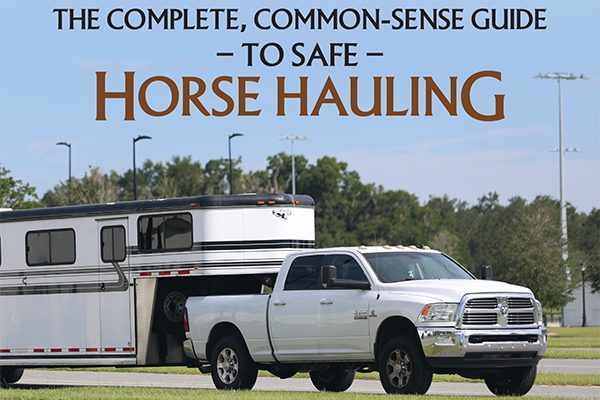
A gooseneck trailer attaches to a hitch in the bed of a truck, which provides more stability and ease of maneuvering. They’re good for hauling heavy loads and multiple horses over long distances.
Click here to read the complete article
242 – November/December, 2025