






Research Update: Block Salt or Loose Salt?
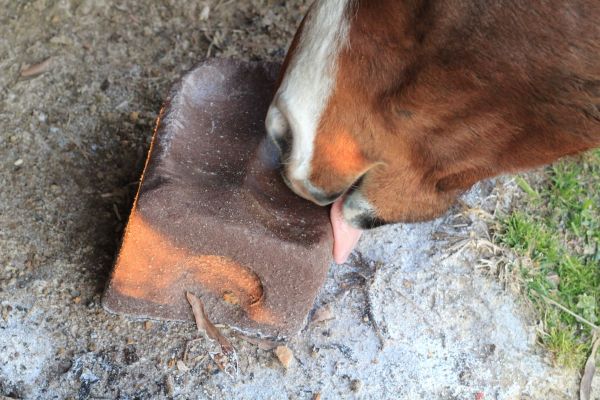
From UMN Extension: Sodium and chloride, found in table salt, are essential for supporting hydration as well as muscle and nerve function in horses. Horse owners often supplement forage diets that are low in sodium by providing horses free access to a salt block. However, whether horses can readily consume salt by licking a block is […]
Dog’s Fractured Skull Repaired after Being Kicked by Horse
October 1, 2026 Comments Off on Dog’s Fractured Skull Repaired after Being Kicked by Horse
UC Davis Weill School of Veterinary Medicine September “Case of the Month” By Rob Warren, September 28, 2026 https://www.vetmed.ucdavis.edu/news/dogs-fractured-skull-repaired-after-being-kicked-horse “To look at her now, you wouldn’t think anything happened to her,” exclaimed Andrea Barbee owner of Tessa, a 5-year-old border collie who was kicked in the head by a horse. But that certainly was not […]
Continue reading …Deworming Horses: Expert Recommendations to Avoid Resistance
September 30, 2026 Comments Off on Deworming Horses: Expert Recommendations to Avoid Resistance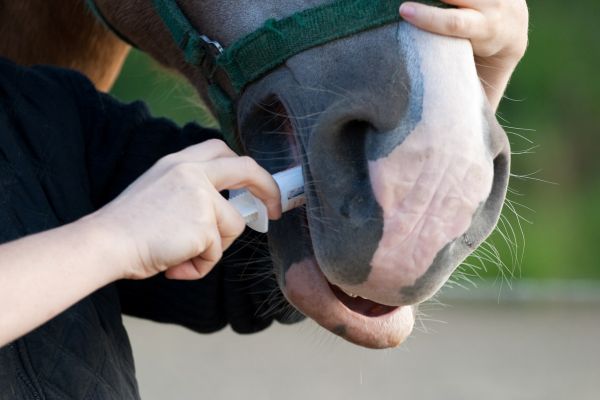
From Kentucky Equine Research: No new dewormers for horses are currently in development, and widespread resistance to existing products is on the upswing. As a result, global efforts to slow antiparasitic resistance are gaining momentum. Julie Shrubb, a veterinary surgeon based in the United Kingdom who chairs Controlling Antiparasitic Resistance in Equines Responsibly (CANTER), an […]
Continue reading …FDA Issues Warning Letters Following Fungal Contamination in a Veterinary Product Linked to Serious Infections in Nearly 100 Horses
September 29, 2026 Comments Off on FDA Issues Warning Letters Following Fungal Contamination in a Veterinary Product Linked to Serious Infections in Nearly 100 Horses
September 29, 2026 The U.S. Food and Drug Administration recently issued warning letters to Neogen Corporation and Sciarra Aeromed, Inc., following an investigation that linked a veterinary wound care product labeled as sterile, Neogen Vet HYCOAT (hyaluronate sodium sterile solution), to serious infections and deaths in horses. This incident involved at least 20 horse deaths, […]
Continue reading …
By Mark Andrews, Equine Science Update, September 5, 2026: Swiss researchers have identified a novel virus in the brains of four horses that were euthanased after developing neurological disease, prompting investigations into whether the virus may represent an emerging cause of equine central nervous system (CNS) disease. Since late July 2026, equine referral hospitals at the Universities […]
Continue reading …AQHF Opens Annual Call for Equine Research Grant Proposals
September 21, 2026 Comments Off on AQHF Opens Annual Call for Equine Research Grant Proposals
AMARILLO, Texas — The American Quarter Horse Foundation is accepting proposals for its annual Equine Research Grant Program, providing qualified researchers with an opportunity to advance scientific knowledge that can benefit the American Quarter Horse and the broader equine industry. Established to support relevant basic and applied research, the AQHF Equine Research Grant Program provides […]
Continue reading …Just 3 Minutes with Miniature Horses and Donkeys Improved Teens’ Mood
September 21, 2026 Comments Off on Just 3 Minutes with Miniature Horses and Donkeys Improved Teens’ Mood
Adolescents Who Read the Equines’ Body Language Were Less Sad and Lonely By Liana Wait, UC Davis, September 15, 2026: Interacting with animals can make people feel calmer and less lonely and anxious. A new study from the University of California, Davis, shows that animals play an active role in shaping these interactions and their outcomes. […]
Continue reading …UC Davis Veterinary Genetics Laboratory Researchers Explore Genetic Diversity in the American Quarter Horse
September 15, 2026 Comments Off on UC Davis Veterinary Genetics Laboratory Researchers Explore Genetic Diversity in the American Quarter Horse
New Research from the UC Davis Veterinary Genetics Laboratory: How assisted reproductive technology (ART) is shaping the future of horse breeding. A new study led by VGL Director Dr. Rebecca Bellone examines how modern breeding practices, such as artificial insemination and in vitro embryo production, are influencing genetic diversity in domestic horses. Focusing on the […]
Continue reading …Register Now for the Inaugural Equine Conservation Summit on November 14
September 12, 2026 Comments Off on Register Now for the Inaugural Equine Conservation Summit on November 14
ANNAPOLIS, MD (September 10, 2026) – The Maryland Department of Agriculture’s Horse Outreach Workgroup is pleased to announce the first Equine Conservation Summit will be held on Saturday, November 14, 2026 in California, Maryland at the University System of Maryland at Southern Maryland. The Summit is geared toward anyone who owns or cares for horses, […]
Continue reading …Mule Helps Scientists Build The Clearest Horse and Donkey Genomes Yet
September 4, 2026 Comments Off on Mule Helps Scientists Build The Clearest Horse and Donkey Genomes Yet
Lexington, KY— A mule has helped researchers build the most complete reference genomes to date for horses and donkeys, giving scientists access to complex regions of DNA that earlier versions could not fully capture. Led by researchers in the University of Kentucky Martin-Gatton College of Agriculture, Food and Environment (CAFE) and published in Cell Genomics, the international study introduces new […]
Continue reading …