








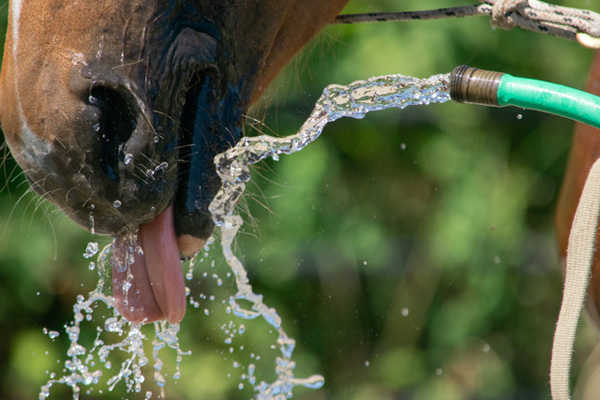
Horses have an innate, finely tuned system that directs them to drink. Understanding how this system works and where it sometimes falls short can help horse owners keep their animals properly hydrated, especially during exercise, travel, or hot weather.
The Basics of Thirst
Thirst is regulated by a neural network centered in the hypothalamus and specialized sensory organs. These structures monitor blood osmolality, which is the concentration of dissolved particles in the blood, as well as fluid volume and key fluid-balancing hormones.
Dry matter intake is one factor that stimulates thirst. Dry matter is the total weight of forage and feed left over after all water is removed. As horses eat, fluid moves into the gastrointestinal tract to aid digestive processes, increasing blood osmolality and stimulating thirst. This is why owners often notice their horses drinking while or after eating hay.
Further, when a horse loses water through sweat and respiration, changes in these signals can increase the desire to drink.1
Horses at rest typically drink throughout the day, often in relation to feeding and management routines. In ponies, both increased plasma osmolality and more concentrated blood have been shown to increase drinking.2
Why Horses Sometimes Don’t Drink Enough
Thirst does not always prompt complete, immediate replacement of fluid and electrolyte losses after strenuous exercise.
Research on horses recovering from exercise-induced dehydration found that voluntary water intake was reduced when there was not a strong enough increase in blood sodium concentration to trigger a full thirst response, meaning a horse can lose significant fluid without feeling driven to fully replace it right away.
That same research also found that fully restoring fluid balance after a significant fluid loss could take several days without additional support, though supplementing horses with a saline solution helped them regain fluid balance much faster, often within the same day.3
This lag between fluid loss and the urge to drink is one reason performance horses, in particular, benefit from proactive hydration strategies rather than relying on thirst alone.
Practical Factors That Influence Drinking
Several everyday factors shape how much water a horse chooses to drink.
Water temperature can influence voluntary intake after exercise. In one study of horses dehydrated by furosemide administration and treadmill exercise, total fluid intake was greatest when fluid was offered at 20° C (68° F), compared with 10° C (50° F); intake at 30° C (86° F) was intermediate.4 Cold water causes rapid cooling of the mouth and throat, which may reduce the sensation of thirst before the horse has replaced its fluid deficit.
Access, palatability, and the type of water source (bucket versus automatic waterer) also affect intake, particularly when horses travel or change environments.
The way water is provided can also influence how horses consume it. Research at Kentucky Equine Research found that adding water alone to feed did not increase total daily water intake because horses compensated by drinking less from their water source.5 Adding water to feed may nevertheless be useful when voluntary drinking is reduced, such as during cold weather or travel.
Electrolyte status also plays a vital role in thirst and fluid balance. After substantial sweat loss, restoring sodium and other electrolytes through an appropriate feeding and supplementation plan can support voluntary drinking and more complete rehydration. In the same Kentucky Equine Research study, adding salt to wet feed increased total water consumption, with horses drinking more water after meals containing more salt.5
For Horse Owners
Because a horse’s urge to drink often lags behind its actual fluid needs, voluntary water intake is not always a reliable indicator of hydration after heavy exercise, travel, or illness.
To safeguard performance and recovery, offer clean water immediately after work and support appropriate electrolyte balance through the horse’s feeding and supplementation program. Research suggests that sodium can encourage water consumption, making proactive hydration management particularly important when horses have experienced substantial fluid losses.
Strategic supplementation of high-sodium electrolyte pastes can help keep horses hydrated, according to Peter Huntington, B.V.Sc., M.A.C.V.Sc., of Kentucky Equine Research. “Well-formulated electrolytes such as Restore Paste and Race Recovery Paste boost plasma sodium and stimulate horses to drink.”
Is Restore Paste or Race Recovery Paste best for your horse? Get a personal recommendation from a Kentucky Equine Research nutrition advisor today!
1Wang, J., F. Lv, W. Yin, Z, Gao, H. Liu, Z. Wang, and J. Sun. 2023. Organum vasculosum of the lamina terminalis and subfornical organ: Regulation of thirst. Frontiers in Neuroscience 17:1223836.
2Sufit, E., K.A. Houpt, and M. Sweeting. 1985. Physiological stimuli of thirst and drinking patterns in ponies. Equine Veterinary Journal 17(1):12-16.
3Nyman, S. 2001. Water Intake and Fluid Regulation in the Horse. Doctoral thesis, Acta Universitatis Agriculturae Sueciae, Veterinaria 98, Swedish University of Agricultural Sciences, Uppsala, Sweden.
4Butudom, P., D.J. Barnes, M.W. Davis, B.D. Nielsen, S.W. Eberhart, and H.C Schott. 2004. Rehydration fluid temperature affects voluntary drinking in horses dehydrated by furosemide administration and endurance exercise. Veterinary Journal 167(1):72-80.
5Kentucky Equine Research. 2026. Research report: Salt and water intake. Accessed September 1, 2026.