








Wild Rice Straw Bedding for Horses: Suitable for Respiratory Health

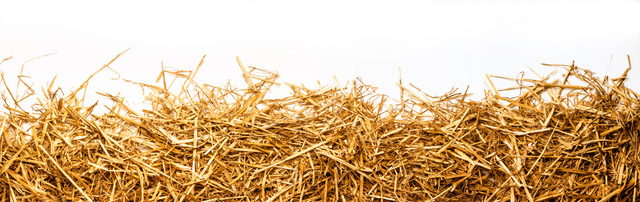
AdobeStock image
While bedding and hay produce inhalable airborne particles that may compromise respiratory health of all horses, in horses with asthma, choice of bedding can be even more important. Recent research shows that wild rice straw, an agricultural byproduct available in some geographical regions, is a suitable bedding, similar to wood sawdust.*
Various airborne particles can induce or exacerbate respiratory disease, particularly in horses with severe equine asthma, including fungi, molds, bacterial-derived endotoxin, microorganisms, mite debris, vegetative material, inorganic dusts, and noxious gases such as ammonia from urine.
These particles cause inflammation of the airways and remodeling of the muscles associated with the airways, resulting in bronchoconstriction and decreased movement of oxygen across the lung tissue (alveoli) to the bloodstream. Additionally, mucus accumulates in the airways and a characteristic cough may develop.
“Allergen avoidance is a top recommendation for preventing and treating asthma,” said Catherine Whitehouse, M.S., a nutrition advisor for Kentucky Equine Research. “When additional treatments are required, in the case of exacerbation of severe asthma, for example, experts recommend a combination of bronchodilators, systemic corticosteroids, and omega-3 fatty acid supplementation.”
“In conjunction with a low-dust environment, supplementing asthmatic horses with long-chain omega-3 fatty acids improves clinical signs of disease and reduces inflammatory markers in horses with severe asthma,” Whitehouse explained.
In terms of allergen avoidance, experts recommend primarily housing asthmatic horses outdoors whenever possible. If horses are stabled, consider using low-dust bedding, offering soaked/steamed hay, and refraining from mucking stalls and sweeping the aisles while horses are indoors.
Many low-dust bedding alternatives to wood shavings and sawdust have been explored. Most recently, wild rice straw was compared to wood sawdust in terms of water absorptive capacity, muck production, particular matter, and ammonia concentrations. In that study, four horses were housed overnight from 5:00 p.m. to 7:00 a.m., using each type of bedding for five days. Each stall was bedded to a standardized depth of 5 to 6 cm.
The research team found:
- Both types of bedding generated similar amounts of muck (35 to 39 kg), but the volume of muck was higher for the wild rice straw due to its lower bulk density and larger particle structure compared to wood sawdust;
- Wood sawdust had a higher water absorptive capacity, but both types of bedding reached saturation in about three hours, indicating daily mucking for both is required;
- The concentration of aerosolized particles increased in the stalls with both types of bedding over the five-day study period. “Overall particle concentrations were high in this study during stall cleaning, exceeding the 24-hour exposure recommendations by the Environmental Protection Agency,” Whitehouse said.
- Ammonia levels were higher in stalls bedded with wood sawdust compared to wild rice straw.
“At first this may seem counterintuitive, considering wood sawdust had higher water absorptive capacity. The researchers suggested the sawdust retained the urine within the bedding matrix, allowing microbes to produce more ammonia, whereas the wild rice straw bedding may have allowed urine to drain away from the stall surface,” explained Whitehouse.
Wild rice straw appears to be a practical bedding option for horses with the potential to improve stall air quality through lower ammonia exposure, which can support respiratory health. As an agricultural byproduct, using wild rice straw as bedding material also contributes to sustainable equine management practices.
*Pyles, M.B., M.A. Brown, A.M. Dobrzelecki, and O.G. Becker. 2026. A wild rice byproduct as an alternative to wood sawdust for equine bedding: a pilot study evaluating effects on stall air quality. Journal of Equine Veterinary Science:105942.