






Winter Barn Ventilation: Balancing Warmth and Well-Being

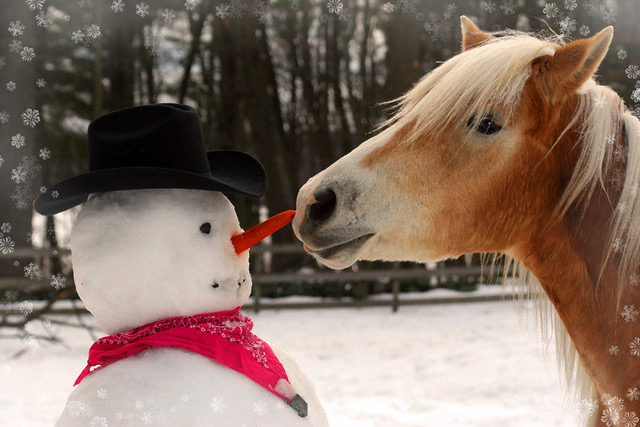
AdobeStock image
From University of Minnesota Extension:
Winter barn ventilation: Balancing warmth and well-being
Does winter weather have you battening down the hatches or stalling your horses more frequently? In tightly-sealed barns, moisture, dust, and ammonia can build up fast. As a result, poor air quality may harm your horse’s lungs as well as your own. Proper ventilation can help protect you and your horse’s health this winter.
What is ventilation?
Ventilation refers to the exchange of stale air that contains moisture, dust, and gases like ammonia for fresh air. A primary goal of ventilation during the winter months is to control moisture within the barn. Cold, humid conditions are uncomfortable for us and our horses. Common sources of moisture include our horses’ breaths, manure and urine, water buckets or fountains, and wash bays. High moisture in barns can contribute to strong odor, water condensing on surfaces, and an increase in the risk of disease. Routinely and thoroughly removing manure and soiled bedding with a fork and shovel, can help reduce moisture and ammonia levels in a barn.
Natural ventilation systems
Natural ventilation systems rely on buoyancy (hot air rises) and wind forces to provide airflow and air exchange. For example, warm stale air may rise and exit the ridge of the roof while fresh air enters eave openings. Often naturally-ventilated barns aren’t heated and have temperatures at or slightly above outside temperatures year round. If you have a naturally-ventilated barn, consider these winter tips:
- Do not seal your barn to keep in warm air or stop airflow. Make sure there’s a continuous source of fresh air such as from eaves or a slightly cracked door or window. Fresh air helps control moisture and ammonia levels, especially in stalls. A small amount of cold air mixing with the warmer barn air will not create drafts, but it will help keep the air healthier for your horse.
- Make sure fresh air reaches all stalls. Horses, water buckets, and soiled bedding are the main sources of moisture and ammonia leading to poor air quality. Airflow in stalls can be restricted by ceilings and solid stall walls. Keeping ceilings open above stalls and using grills or mesh stall doors and partitions can help improve airflow.
- Remember, most healthy adult horses stay comfortable in cold weather as long as they have forage, shelter, and water. What feels cold to you may be perfectly fine for your horse. In the winter, keeping the air fresh and conditions dry in the barn are more important than trying to make the barn warm.
Mechanical ventilation systems
Mechanical ventilation systems are common in well-insulated, climate-controlled barns. These systems provide airflow and air exchange through a series of inlets and exhaust fans. During cold weather, ventilation rates for these systems should be 25 cubic feet of air per minute (cfm) per 1,000 pounds of horse. Keeping sidewall exhaust fans running provides the best cold air exchange. Mechanically-ventilated barns will have a slight negative pressure that draws fresh air through the inlets. Having at least one air inlet near each box stall can help achieve good air quality within the stall.
Signs of poor ventilation
Regardless of your ventilation system, you will need to regularly check the conditions in your barn and make adjustments as needed. If you notice any of these signs, it’s time to improve airflow:
- Water beading or dripping down barn walls or windows.
- Foggy or frosty glass on the interior side of the barn windows.
- Strong, pungent odor (ammonia) upon entering the barn. Ammonia levels are highest at the source (usually stall floor). If you smell ammonia, seek fresh air.
- You experience burning eyes, nose, or throat; coughing; or headache. These are all effects of ammonia exposure.
Authors: Larry Jacobson, Extension emeritus engineer; Chuck Clanton, professor of Bioproducts and Biosystems Engineering; and Hannah Lochner, MS, University of Minnesota