








University of Kentucky Study Findings May Provide Safer Care for Horses at Risk of Laminitis

At the Martin-Gatton College of Agriculture, Food and Environment, researchers could have found a starting point to help horses at higher risk for a potential side-effect of common medications.
AdobeStock image
By Jordan Strickler
Published on February 16, 2026
Lexington, Ky.—Joint injections that contain corticosteroids, such as triamcinolone acetonide, are a common anti-inflammatory in a veterinarian’s toolbox to treat pain and swelling from conditions like arthritis. However, even though the drug goes into a joint, some of it can have an effect outside of the joint. When that occurs, a horse’s blood sugar and insulin can be elevated for days. Now researchers from the Martin-Gatton College of Agriculture, Food and Environment are working on a solution.
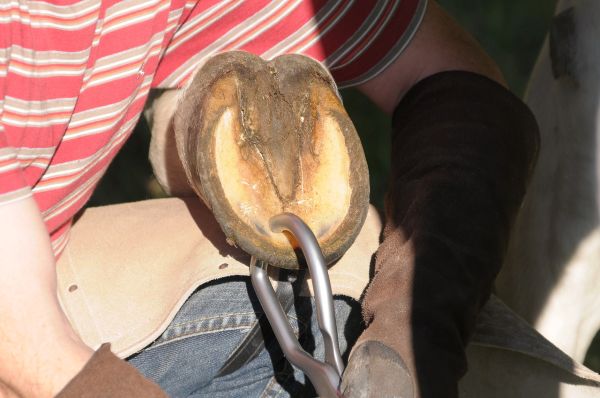
That matters because insulin is tied to laminitis, a painful hoof condition that can cause long-term damage or result in euthanasia. While horses that already struggle with insulin control are the ones veterinarians typically worry about most, laminitis is a concern for any horse receiving a corticosteroid injection.
“Corticosteroids injections are an important option for managing joint pain and inflammation, but we also have to realize that they may have effects beyond the joint,” said Allen Page, DVM, assistant professor of equine health and inflammation. “Treatment of only a single joint can affect blood sugar and insulin concentrations, and that’s where laminitis risk becomes part of the conversation.”
An Equine Veterinary Journal study by researchers at the Maxwell H. Gluck Equine Research Center looked at whether a drug called ertugliflozin could decrease the insulin spike after corticosteroid joint injections. Ertugliflozin is in a drug group called SGLT2 inhibitors, which are commonly used in humans with Type II diabetes. These drugs help the body get rid of extra sugar through urine, lowering blood sugar and, in turn, decreasing insulin production.
Led by Page, a team conducted their study using eight, mixed-breed geldings (aged 6-11) from the Department of Veterinary Science herd. The work, which took place between June and July 2025, ensured that each horse went through the same two rounds of treatment: One where horses received only corticosteroid injections, and another where the horses also received ertugliflozin by mouth once a day for a week before the joint injections and a week after.
For the injections, every horse got a dose that matches real clinical use: 9 mg of triamcinolone acetonide injected into each front fetlock joint (18 mg total per horse). Afterward, the researchers tracked resting blood sugar and insulin, in addition to an oral sugar test as a controlled way to see how each horse’s insulin changed.
Study results
The major finding was when the horses were on ertugliflozin, their blood sugar and insulin did not rise as much after the injections. Resting blood sugar was lower for two days following the joint injections while resting insulin was significantly lower for three days.
Additionally, ertugliflozin treatment moderated increases in insulin typically seen with the oral sugar test two days after the joint injection. Importantly, the researchers also reported no obvious side effects based on exams of the horses and the lab work they monitored.
“Our results suggest ertugliflozin can blunt the temporary glucose and insulin changes we see after a joint injection with triamcinolone,” Page said. “This study was in healthy horses, but it gives us a starting point to explore whether this approach could help horses that are at higher risk for laminitis.”
The next step is the one that really matters for owners: testing this approach in insulin-dysregulated horses to see whether ertugliflozin can reduce post-steroid insulin increases in animals needing that protection most.
“Going into this study, we were not sure what we were going to find,” Page said. ”It’s clear that we need to expand this research into horses with elevated insulin and see if ertugliflozin may decrease the risk for laminitis in this important portion of the equine population.”