







Horse Owners Should Begin Stocking up on Hay Now Before it’s Too Late

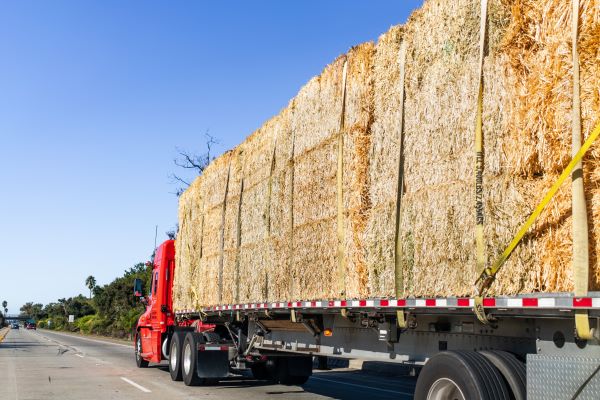
AdobeStock image
Lexington, Ky.— Horse owners are encouraged to pay close attention to hay this summer. Experts and producers across the region are sounding the alarm: This year’s first hay cutting came up much shorter than normal, and horse owners who don’t plan ahead could find themselves in a tough spot this fall and winter.
“We’re in a time with limited water resources,” said Bob Coleman, equine Extension associate professor in the Martin-Gatton College of Agriculture, Food and Environment. “In one case, a farm that normally brings in around 1,800 bales only got around 800. That’s less than half of what they typically expect. The main reason? Not enough rain. We had a reduced first cut, and who knows what second cuts are going to look like.”
Drought-like conditions have been scattered across the state, hitting some areas harder than others.
So, what does this mean for horse owners?
Coleman is urging horse owners to take these steps right away:
- Calculate exactly how much hay is needed — Don’t just count bales; figure out the total weight in pounds as well since some sellers sell bales of different weights.
- Buy now — It’s important to stock up before prices climb higher and supplies dry up.
- Figure out storage solutions — Keep hay dry, whether via a tarp, new storage structure or making an arrangement with a local hay producer to store it on their property until needed.
- Consider getting hay tested — Owners can know the hay’s nutritional value and feed smarter. This reduces waste and makes supplies last longer.
- Plan to start feeding hay earlier than usual — Low rainfall also means pastures may not grow as well as normal, leading owners to feed hay earlier than a normal year.
Experts also point out that hay is a commodity that travels. Producers will sell to whoever pays the best price, even if that means shipping out of state. That suggests local supplies could disappear fast.
“The sky is not falling, but plan now,” Coleman said. “It’s really just a best management practice anyway. The bottom line is don’t wait until you’re completely out of hay to start thinking about this. A little planning now could save horse owners a whole lot of stress and money.”
###
Writer: Jordan Strickler, jstrickler@uky.edu
The Martin-Gatton College of Agriculture, Food and Environment is a public agricultural college at the University of Kentucky.