







Hagyard Equine Medical Institute to Expand Equine-only Ophthalmology Services beyond Central Kentucky

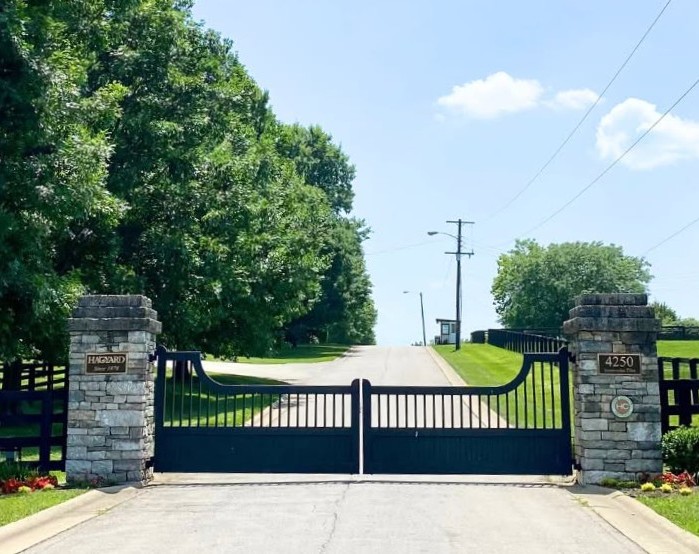
Photo credit: Hagyard Equine Medical Institute
Looks to address shortage of veterinary ophthalmologists that impacts availability and wait times for eye care, especially in rural areas.
Lexington, KY: In response to the growing shortage of equine veterinarians in the U.S., Hagyard Equine Medical Institute announced a formal expansion of its equine eyecare services beginning in 2026.
The Hagyard veterinary team includes Dr. Stephanie Bell, DVM, Diplomate ACVO, who is one of a very limited number (<10) of full-time, board-certified veterinary ophthalmologists in the U.S. who sees horses exclusively, putting them on the forefront of equine ocular care. Dr. Bell and Hagyard’s eyecare team are committed to expanding caseloads and prioritizing surgeries.
The current shortage of equine veterinarians is a result of both natural attrition from retirement, and fewer veterinary students choosing to specialize in equine care. Two data points illustrate the challenge. Today, there are approximately 3,785 equine veterinarians in the U.S. However, there are approximately 7.2 million horses in the U.S. That is an average of over 1,900 horses per veterinarian. When it comes to specialty equine care, such as equine ophthalmology, the challenge is even greater.
“Most veterinary ophthalmologists are solely small animal vets, though they may see the occasional horse,” said Dr. Bell. “Very few of us have a primary equine focus. As a result, many horse owners – especially those in rural areas – struggle to find care from an equine ophthalmologist care specialist.”
This trend has impacted the accessibility and immediacy of eye care for horses, with wait times at some universities now at approximately 2-3 weeks to be seen by an ophthalmologist.
“We want to help lead the industry to a care model that enables horses to receive eye care from an equine-only ophthalmologist,” Dr. Bell continued. “Further, we want to aid and support veterinary schools that may be overloaded with requests for equine eye care. Referring vets and clients need to feel comfortable knowing their horse is receiving the highest level of care from the best-trained veterinarians. The horses deserve nothing less.”
The good news is that Hagyard’s expansion gives horse owners access to a deep range of eye care, including:
> Conditions – Infections of the cornea including ulcers and stromal abscesses, ocular trauma, eyelid disorders, immune mediated conditions including uveitis and keratitis, corpora nigra cysts, compromised vision, glaucoma, periocular neoplasia including sarcoids
> Diagnostics – Slit lamp biomicroscopy, binocular fundic examination, tonometry, cytology, culture, ultrasound, biopsy, electroretinography, streak retinoscopy, advanced imaging
> Treatments and Procedures – Subpalpebral lavage placement, corneal surgeries (corneal collagen cross-linking, grafting, transplants, diamond burr keratotomy, keratectomy, reconstructive procedures), cataract surgery, cyclosporine implants, eyelid surgery, immunotherapy, intrastromal and intravitreal injections, laser cyclophotocoagulation, and photodynamic therapy.
In addition to expanding eye care to address the equine veterinarian shortage, Hagyard is also working to reverse the trends of student veterinarians choosing not to specialize in equine care. As part of Hagyard’s 150th anniversary in 2026, they have established the E.T. Hagyard 1876 Scholarship in honor of Dr. E.T. Hagyard, the first veterinary graduate to establish a practice in the state of Kentucky. The scholarship is the result of a partnership with the American Association of Equine Practitioners (AAEP) and the Foundation for the Horse – a 30+ year old 501C3 organization. The vision is to raise $1.5 million over a three-year period, use the initial endowment to provide three scholarships each year, and to grow the endowment such that the number and amount of scholarships offered would increase every three years.
“The way we see it, the physical health of these amazing equine athletes – from eyes to fetlocks and everything in between – has a direct relationship to the financial health of the industry as a whole,” said Dr. Luke Hagyard Fallon, DVM, Medical Director and the 5th generation of the Hagyard founder’s family. “We just want to do our part on both sides of the equation.”
About Hagyard Equine Medical Institute: With nearly 60 veterinarians and 150 years behind it, Hagyard Equine Medical Institute is one of the oldest and the largest equine veterinary practice in the world. Based in Lexington, Kentucky, the facility, located across the street from the Kentucky Horse Park, boasts superior ambulatory services, the world-renowned Davidson Surgery Center, McGee Medicine and Fertility Centers, Hagyard Laboratory, Hagyard Sports Medicine Center, and hyperbaric medicine facilities. For more information, visit hagyard.com.