








Mare’s Wax: A Key Sign Foaling is Near

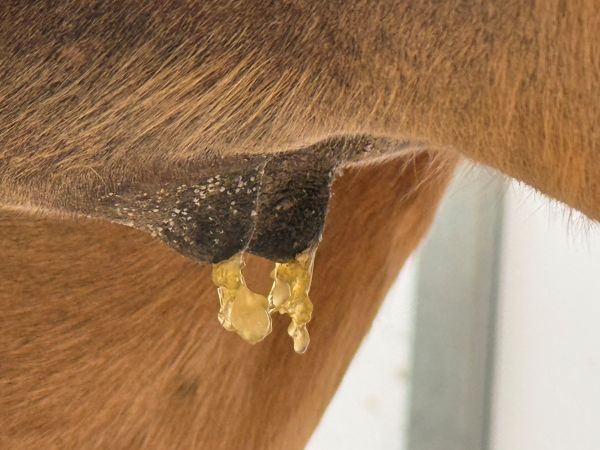
Image: AAEP
From AAEP:
If you’re monitoring a pregnant mare, one of the most talked-about signs of impending foaling is “waxing.” But what does it actually mean?
Learn more from The American Association of Equine Practitioners:
Mares wax when small, bead-like droplets of colostrum (first milk) appear on the ends of the teats. This happens as the udder fills and the body prepares for birth.
What to know:
– Waxing usually occurs 12–48 hours before foaling, though timing can vary.
– Not all mares will wax—so don’t rely on this sign alone.
– The presence of wax indicates that colostrum production is underway, which is essential for the foal’s immune protection.
Important tips:
– Once waxing appears, increase monitoring—foaling could happen at any time.
– If the mare drips significant milk before foaling, consult your vet. This can mean loss of valuable colostrum.
– Combine waxing with other signs like relaxation of the tail head, softening of the muscles, and behavioral changes.
Being attentive during these final stages helps ensure a safe delivery and a healthy foal.
Find the AAEP Foaling Guide here: