








Virginia Tech-developed H-FIRE Treatment Now Offered at Equine Medical Center

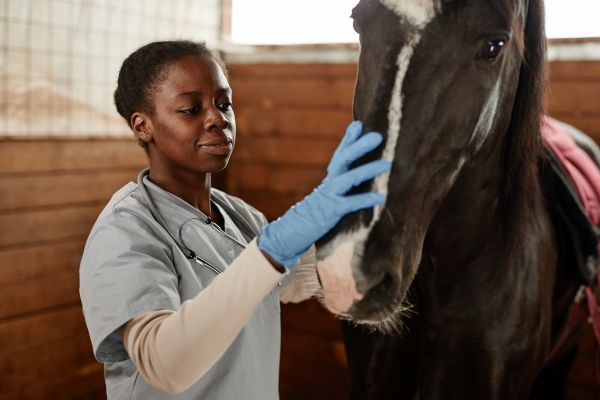
AdobeStock image.
The Marion duPont Scott Equine Medical Center in Leesburg now offers H-FIRE, a revolutionary non-thermal tumor ablation procedure originally developed through Virginia Tech’s collaboration between veterinary medicine and engineering.
Horse owners battling stubborn sarcoids and melanomas have a new option: a tumor-destroying technology that allows most horses to remain standing during treatment, eliminating the violent muscle contractions induced by other treatments that previously required general anesthesia. The equine medical center is one of two facilities in the United States offering high-frequency irreversible electroporation (H-FIRE) for equine patients.
“Sarcoids and other tumors are unpredictable and frustrating to treat,” said Elsa Ludwig, clinical assistant professor of equine surgery at the center. “There is every chance that the tumor may recur or be particularly aggressive in the future.”
Ludwig brings experience with H-FIRE to Virginia. As an equine surgeon at North Carolina State University – the only other U.S. facility offering the treatment – she worked with H-FIRE researchers to treat clinical cases of horses with sarcoids, melanomas, squamous cell carcinomas, and rare skin tumors such as myxoma, achieving what she describes as great success.
Why conventional treatments fall short
The challenge with equine tumors extends beyond the initial diagnosis. Current treatment options have a low success rate for complete resolution, and when sarcoids recur, they often return more aggressively than when they first appeared, making subsequent treatments even more difficult.
The standard treatment approach combines surgical excision with local chemotherapy, but intralesional chemotherapeutic drugs are poorly absorbed by tissue. Veterinarians must use high concentrations of medicine to achieve efficacy, which can result in tissue necrosis and damage to surrounding structures. Horse owners and caretakers must exercise ongoing caution when handling animals after chemotherapy treatment. Even with these precautions, success remains uncertain.
How H-FIRE works
The science behind H-FIRE involves using electricity to improve chemotherapy uptake. Electrical pulses create holes in tumor cell walls, allowing more chemotherapeutic drugs to enter and destroy the cells. This means the least amount of medicine is required, which is safer for horses and for those handling them after treatment.
The engineering breakthrough – delivering electrical pulses in quick, intermittent bursts rather than sustained charges – eliminated the muscle contractions that once required general anesthesia. Virginia Tech biomedical engineers developed the technology starting in 2011, and veterinary researchers began equine clinical trials in 2013. The team included Rafael Davalos, then a biomedical engineering professor; Michael Sano, now an assistant professor at the University of North Carolina/NC State; and John Robertson, professor emeritus with appointments in both the College of Engineering and the veterinary college.
The majority of horses can now be treated while standing and sedated, with only local anesthesia at the treatment site. General anesthesia may occasionally be necessary depending on the horse’s temperament or the tumor’s location.
Beyond immediate tumor destruction, emerging evidence suggests H-FIRE may also boost the horse’s natural immune system, helping the body recognize and attack tumors if they develop elsewhere.
Treatment protocol and outcomes
Following surgical excision and initial H-FIRE treatment, equine patients typically return monthly for two to three additional treatments combining H-FIRE and chemotherapy. Complications are minimal, and horses are not out of work for long, particularly after follow-up appointments. For horse owners, this translates to fewer emergency stall-rest situations and faster returns to competition, training, or regular activity.
The technology has proven to be what Ludwig called a “game-changer” for managing skin tumors, improving complete resolution rates. By reducing the number of veterinary visits and lowering chemotherapy drug usage, H-FIRE also helps keep treatment costs manageable for horse owners.
Horse owners interested in learning whether H-FIRE may be appropriate for their animal can contact the Marion duPont Scott Equine Medical Center at 703-771-6842.