








Lyme Disease In Horses: The Invisible, Expanding Threat Behind Vague Symptoms

Click here to read the complete article
354 – July/August, 2026
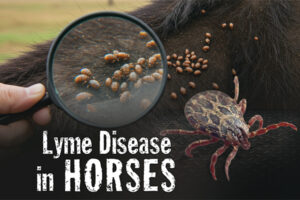 By Sarah Welk Baynum
The horse isn’t quite right—but nothing clearly points to why. The lameness shifts, performance declines, behavior changes. Could it be Lyme disease?
Today, Lyme disease is no longer confined to a handful of regions, making it an increasingly common concern for horse owners across the country.
However, Lyme disease has become both a growing concern and a frustrating question mark. While more horses are testing positive than ever before, diagnosing the true clinical disease–and knowing when it’s actually to blame for symptoms–is far more complicated than a single blood test.
In this article, veterinarians from The Ohio State University and the University of Pennsylvania’s New Bolton Center break down how Lyme disease develops, why it’s so difficult to diagnose, and what horse owners need to know to make informed decisions about testing, treatment, and long-term management.
Lyme Disease
The Increasingly Expanding Tick-Borne Disease
Click here to read the complete article
354 – July/August, 2026