







Choke in Horses

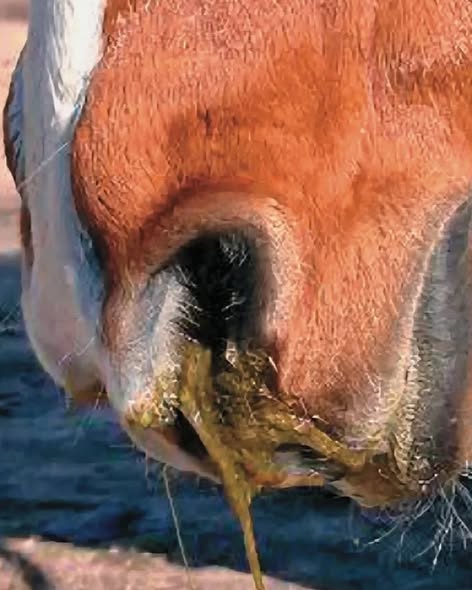
Image courtesy of AAEP and Barrow Veterinary Service.
From the American Association of Equine Practitioners:
Here’s an important explanation of choke in horses from our friends at Barrow Veterinary Service:
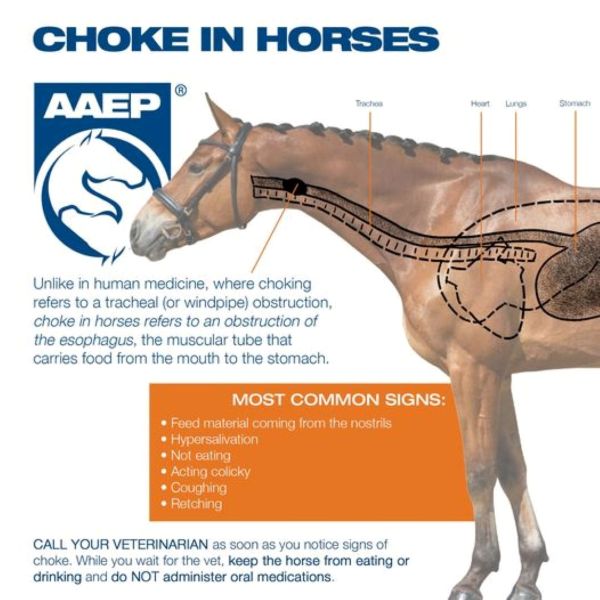
“Choke is a condition where feed becomes lodged in the esophagus. Although the term can sound alarming, horses with choke can usually still breathe. That said, choke is always a veterinary emergency and should be addressed promptly.
What happens during choke?
When material becomes stuck in the esophagus, saliva and feed can’t pass normally. This leads to discomfort and the characteristic signs many owners recognize. If not treated quickly, choke can result in complications such as esophageal irritation or aspiration pneumonia if feed or saliva enters the airway.
Common signs of choke include:
- Feed or saliva draining from the nostrils
- Repeated coughing, gagging, or retching
- Stretching or lowering the neck
- Anxiety or discomfort
- Difficulty swallowing
Why does choke occur?
- Horses eating too quickly
- Dry or poorly soaked feeds
- Coarse hay or feed pellets
- Dental problems that prevent proper chewing
- Limited access to water
What should you do if you suspect choke?
- Remove all feed immediately
- Keep the horse calm and quiet
- Call your veterinarian right away
- Do not give water, oil, or attempt to flush the esophagus yourself
Prevention tips:
- Ensure regular dental care
- Slow down fast eaters (feed pans with obstacles, smaller meals)
- Soak pelleted feeds when appropriate
- Provide constant access to clean water
Early intervention leads to the best outcomes and helps prevent serious complications.”
If you have questions or suspect your horse is choking, contact your veterinarian immediately.