








Defining Ranch Reining

Click here to read the complete article
166 – September/October, 2026
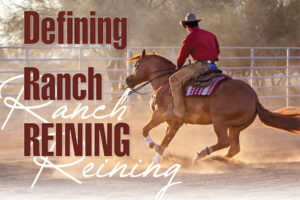 By Taylor Fabus
As Ranch classes continue to grow in popularity across breed associations and open shows alike, Ranch Reining has become a staple of the Ranch division. Yet despite its widespread appeal, many exhibitors still have questions about what judges are looking for and how Ranch Reining differs in style and presentation from traditional Reining.
At first glance, the classes appear remarkably similar. Competitors navigate patterns featuring circles, lead changes, spins, stops, and rollbacks, with runs scored on the familiar reining system that begins with a base score of 70 and awards maneuver scores ranging from -1.5 to +1.5. Penalties are assessed for mistakes such as incorrect leads, breaking gait, or failing to complete the pattern as prescribed.
According to AQHA, Ranch Reining measures a stock horse’s ability to perform basic handling maneuvers while demonstrating the versatility, responsiveness, and willing attitude expected of a ranch horse. The class is also one of the core events within the Versatility Ranch Horse competition.
The foundation of the class is rooted in the same principles that guide all forms of Reining. As the National Reining Horse Association states, “To rein a horse is not only to guide him but also to control his every movement. The best reined horse should be willingly guided or controlled with little or no apparent resistance and dictated to completely.”
Click here to read the complete article
166 – September/October, 2026