








Big Red: From Wild Mustang to U.S. Border Patrol Horse With 14 Years of Active Service

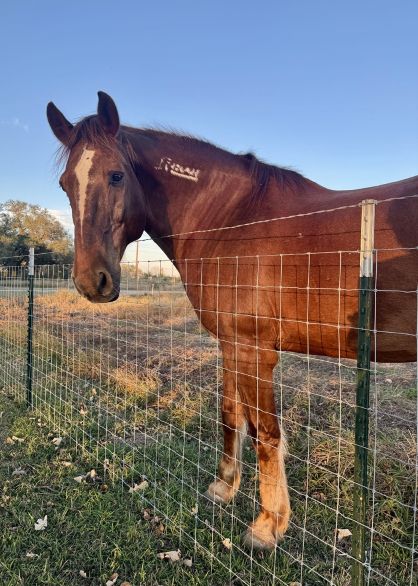
18-year-old Big Red has now joined a loving family for his well-earned retirement on 14 acres in Texas.
Captured in a controversial BLM roundup in 2010, 18 YO Twin Peaks mustang Big Red, recently retired, is one of the longest serving Border Patrol horses in history.
By Delores Kuhlwein and Lilly Brunk
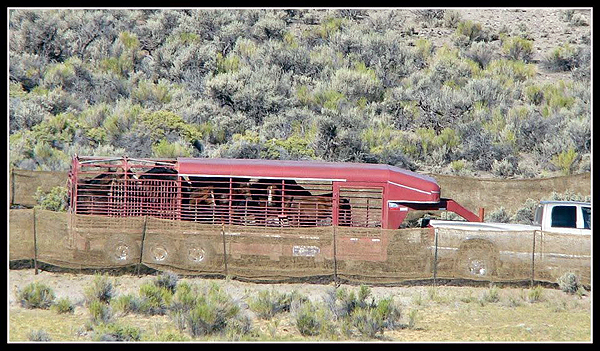
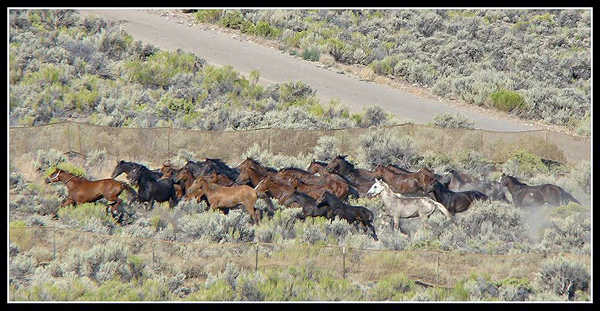
The 2010 Twin Peaks round up of wild horses was one of the most divisive in history for the Bureau of Land Management. Their removal of more than 1600 horses and burros prompted litigation and public disapproval.
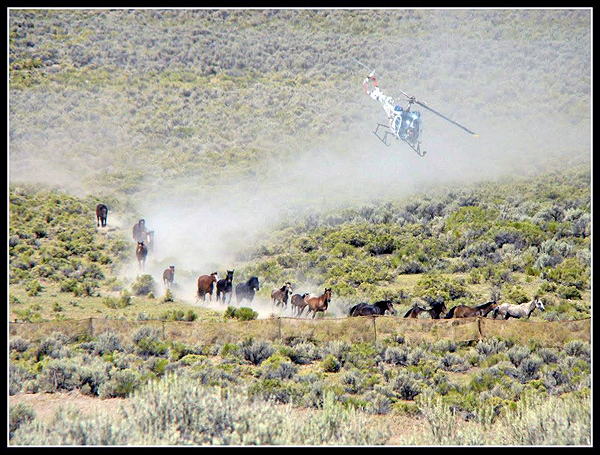
All Twin Peaks BLM roundup photos courtesy of Linda Hay of Run With the Wild Ones. Big Red is thought to be part of the group captured by Hay’s camera during the roundup.
But from the ashes of this particular controversy rises an equine hero later named “Big Red,” then a two-year-old colt eventually labeled BLM #08608369 and believed to be captured on September 10, 2010, in Northern California. He’s thought to be pictured in images captured by a local photographer, one of the many who’d come to document the debated roundup.
Ultimately, the Twin Peaks’ mustang Big Red, one of many such mustangs sought after for his intelligence, athleticism, and resilience, would blossom to 17 hands, and become an esteemed U.S. Border Patrol Horse.
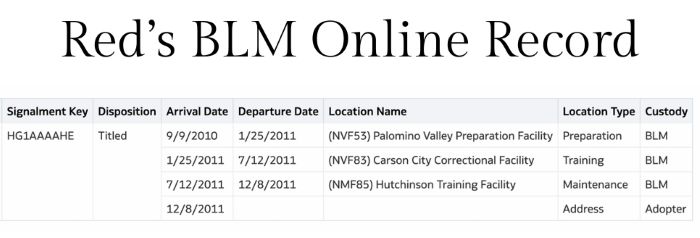
IBig Red’s History BLM # 08608369– Titled at the Palomino Valley Preparation Facility 9/9/2010 – 01/25/2011. This facility is where Big Red would have received his freeze brand, initial veterinary exam, and would been designated to transfer to the next site – The Carson City Correctional Facility.
“Big Red was broken and trained through the BLM partnership with the correctional training programs,” explains Lilly Brunk, Texas resident and wife of a Border Patrol Agent. Brunk, who researched Big Red’s history extensively, says, “He was first taken to the Palomino Training facility, then approved and transferred to the Carson City Corrections unit, where inmates trained him for six months. From there, he would have had to show great potential, as he was then transferred to another program at the Hutchinson correctional training unit. Once horses enter these programs, they are available for adoption and/or auction.”
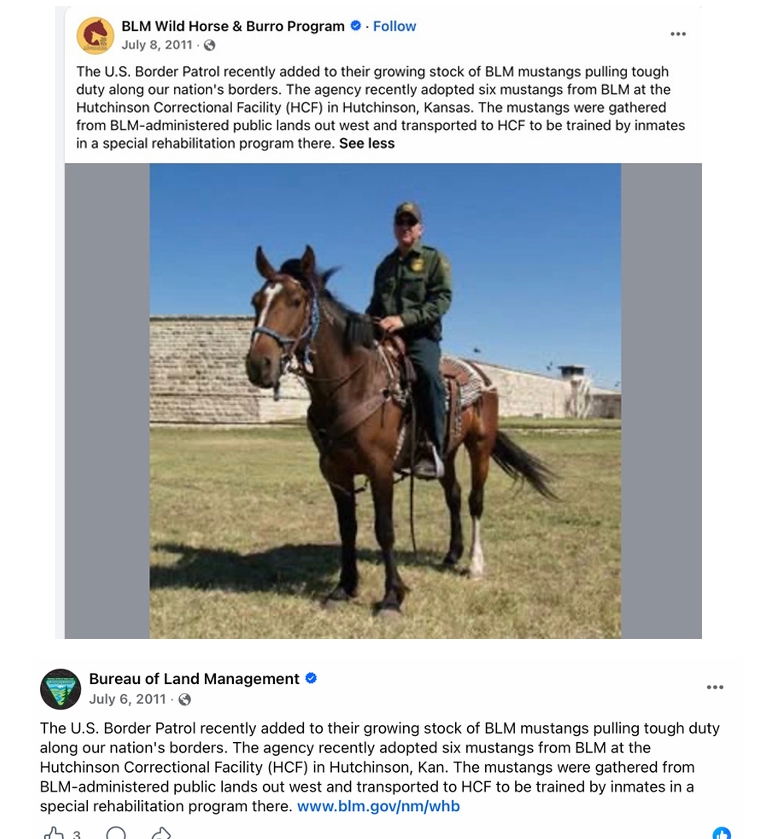
Screenshot from BLM Wild Horse & Burro Program.
She also discovered the posts in which US Border Patrol sent agents to select horses during the time Red was being trained (see her screenshot). They only selected a few horses, and he was one of them. From there, he began service at the Brackettville Station in Texas.
When their horse patrol unit closed, he was transferred to Carrizo Springs station, where Brunk’s husband, who has served for almost 13 years, 4 in the unit, rode the stoic mustang in the field for duty many times. “In his early years of service, his reputation was that of a strong Mustang. He could be known as a bit of a firecracker,” Brunk reveals. In fact, he was the alpha over 24 other horses in the Carrizo Springs Station.
Brunk says Red softened with age, however, and during his last few years of service, became a substitute ride when other horses were injured or out of service. He was also used for training newer riders.
A typical day in the patrol unit, Brunk says, includes mucking the stalls and one agent feeding all 25+ horses. “Some need medication, some need turn out, some are going out on duty for the day with their assigned agents. The agents on shift will then get their assignment for the day, tack up their horse (usually assigned and rode regularly) and they trailer them and out to work they go. They go out and ride, sometimes in fast pursuit. The horses and the agents work hard in rugged and remote conditions. At the end of the day, they return and offload. The horses get fed dinner and a day’s work is done. The horses and their agents go through quarterly and yearly certification training. These include skill sets, desensitizing, and prep for hazards the agents and horses may encounter in the field.”
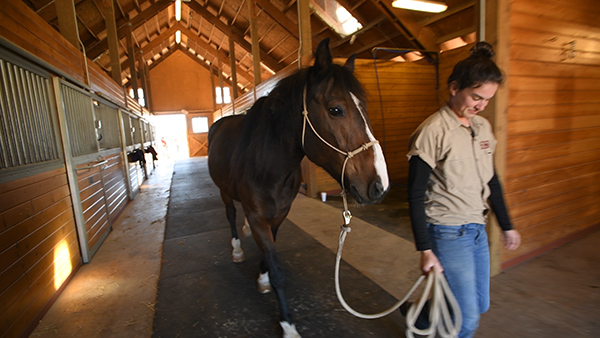
In 2020, after nearly seven years of U.S. Government service, former wild mustang Bob, age 10, settled into a well-deserved retirement at the Cleveland Amory Black Beauty Ranch in Murchison, Texas. Photo: Humane Society of the United States.
Typically, a Border Patrol horse will serve approximately seven years and are retired by age 15, Brunk learned from the DC coordinator. That aligns with the 2020 press release from Humane Society of the United States, also shared online at The Equine Chronicle, announcing the retirement of 10-year-old Bob, the U.S. Border Patrol Horse with the longest record of active service at the time, to Cleveland Amory Black Beauty Ranch in Murchison, Texas: U.S. Border Patrol Horse With Longest Record of Active Service Has Retired | Equine Chronicle
“This range is because, like our BP agents, injuries come with the job,” Brunk explains. “The horses are extremely well taken care of; however, they cannot be utilized safely after a certain age and capability.”
Big Red upturned that record when he came up for retirement in November 2025 at the age of 18.
“For Big Red to have been captured, trained, then maintained stamina for 14 years of service, and not be injured out of service and to be 18 years of age, all make for an exceptional legacy he leaves behind. He is one of the longest serving horses in the US Border Patrol,” Brunk says.
When Big Red’s retirement came, Brunk says their hands-on knowledge of him assured them he would be a good fit for their family. “He is very intelligent and confident and even has a good sense of humor. For example, when my husband gets home and goes to check him, bridle him, or groom him, Big Red “lovingly” nips at him regularly. Not aggressively, but almost as old work buddies poking fun. He never exhibits that behavior to anyone else.”
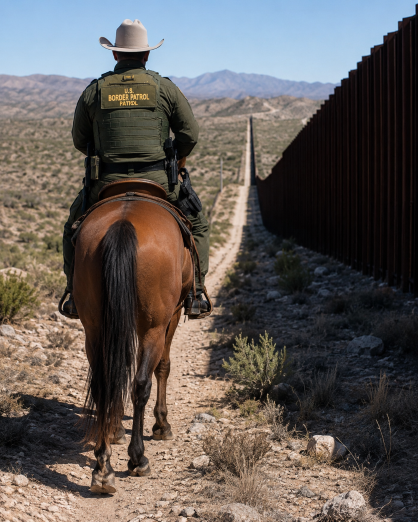
“For Big Red to have been captured, trained, then maintained stamina for 14 years of service, and not be injured out of service and to be 18 years of age, all make for an exceptional legacy he leaves behind. He is one of the longest serving horses in the US Border Patrol,” Brunk says. (Chat GPT image used to protect agent identities.)
Additionally, even though he’d formerly lived a childfree life, the family reports he’s amazingly sweet and kind to the children. “Wherever they are in the yard, he always comes to watch them play. He is a gentle giant,” says Brunk.
His well-deserved retirement on 14 acres with the family, and two young daughters who are always up for apple delivery. Brunk shares, “He loves his daily apple. We all enjoy riding him. Big Red gets the “zoomies” on occasion and happily trots in the pasture. Life is good.”
Most of all, the family wants everyone to know of the horses that serve with incredible intelligence and tenacity within the US Border Patrol. “We feel so blessed to be able to care for such an incredible horse.”
Thank you to Lilly Brunk and family for allowing us to share just a piece of Big Red’s story! Your research of his career, and respect for his service, is second to none. Thank you also to your family for the service.
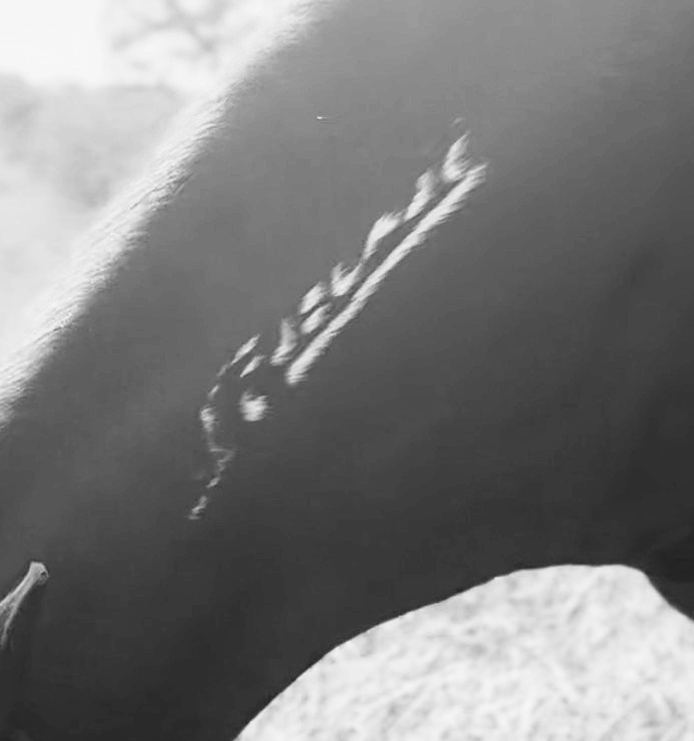
Learn about the freeze brands that wild horses and burros are given by BLM: https://www.blm.gov/wild-horse-and-burro/adoptions-and-sales/freeze-marks