








Let’s Talk Thrush

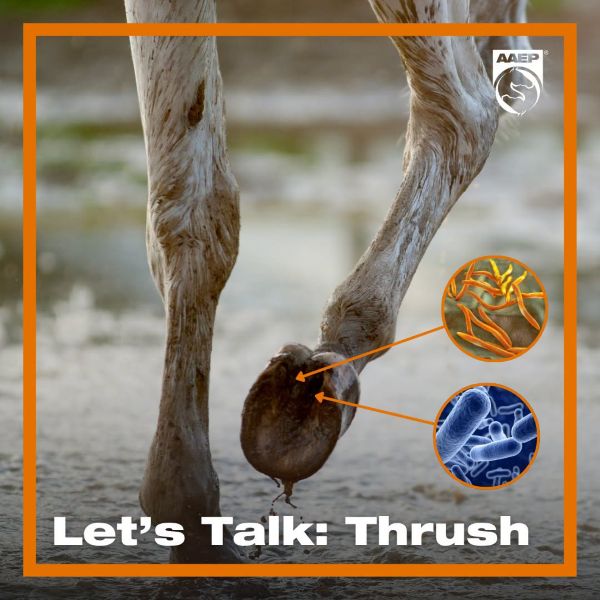
Photo credit: AAEP
From AAEP:
Many horse owners have at one point or another gone to pick out their horse’s feet only to be met with a foul odor to the nose and the sight of black discharge.
This is an infection of the frog called thrush, most often associated with a compromised, recessed frog and conditions that let dirt, manure, urine, and moisture accumulate in the sulci.
It’s commonly recognized by:
- Black discharge in the frog grooves
- Strong, foul odor
- A narrow, eroded, unhealthy-looking frog
- Sometimes a deep crack in the central sulcus
- Pain or lameness in more severe cases
Key Points:
- Wet, dirty footing and poor daily hoof care can contribute.
- Lack of exercise may also play a role.
- Cases often improve best when you address both the infection and the hoof mechanics/farriery behind the unhealthy frog.
- Simply applying products without improving the frog’s health and hoof shape may have limited value.
Basic care include:
- Daily hoof cleaning
- Keeping the horse in a clean, dry environment
- Ongoing hoof care/farriery attention
- Veterinary/farrier involvement if the frog is painful, deeply fissured, bleeding, or the horse is lame
If you suspect your equine companion has thrush, reach out to your veterinarian and farrier.
We’ve also shared a YouTube video on How to Treat Thrush with Copper Sulfate from Springhill Equine Veterinary Clinic: