








Helping Your New Horse Fit In


All graphics credit: AAEP
The American Association of Equine Practitioners offers some sage advice for settling in a new horse:
Bringing a new equine companion home can be a very exciting experience; however, it doesn’t come without its challenges and stresses as you try to help your new friend “fit in.”
Horses go through a good deal of stress when moving to a new facility and it can take days, weeks or even months for them to fully settle into their new surroundings.

Though moving can be stressful on your new four-legged family member, here are a few things you can do to make their transition as smooth as possible:
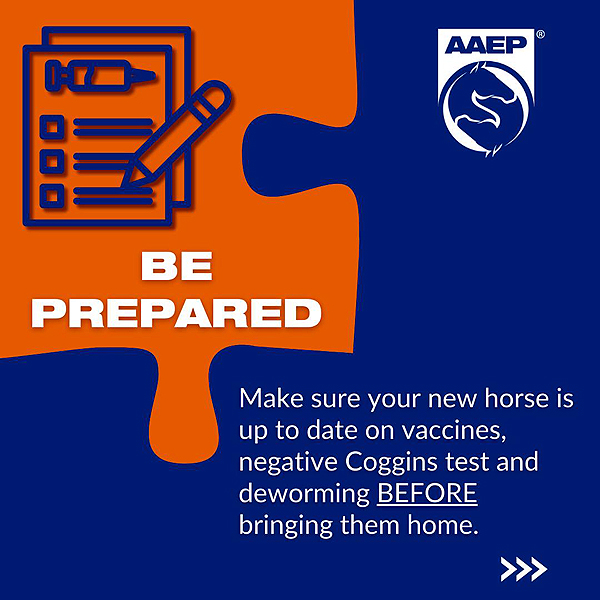
- Make your new friend’s environment as welcoming as possible by ensuring that your fences and pastures are safe and in good repair. See that all horses on your property have a current negative Coggins test and are up to date on vaccinations and dewormers. Like people, horses are much more susceptible to infectious diseases when under stress.
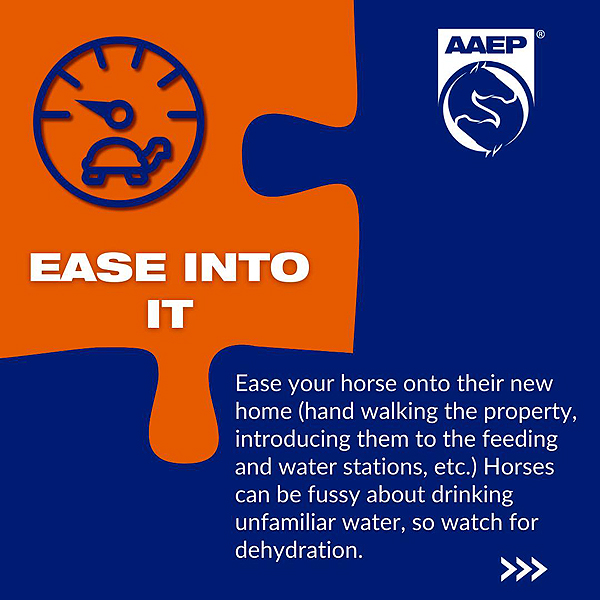
- Make a gradual switch from your horse’s old diet and turnout routine to the new schedule to avoid the risk of colic and other complications. Be sure to monitor your new horse’s water intake as well.
- Remember that mixed herds of geldings and mares are generally more problematic, as some geldings can become protective of their females and attack other geldings. Once your new horse is introduced to other members of the herd, you can expect to see threats, but also likely some chasing, biting, and kicking until a revised pecking order is established. This is normal and needs to be allowed to take place, as long as it doesn’t become too dangerous.

Keep a sharp eye out for injuries and lameness and consider separating the horses at night for a few days so YOU can get some rest instead of worrying. Mentally rehearse what steps you will take in case of emergency, see that your first aid kit is in good order and be sure to have your trusted horse doctor on speed dial!
If you have questions or concerns about welcoming home your new equine companion, reach out to your veterinarian.