







Compounding Pharmacies and Your Horse

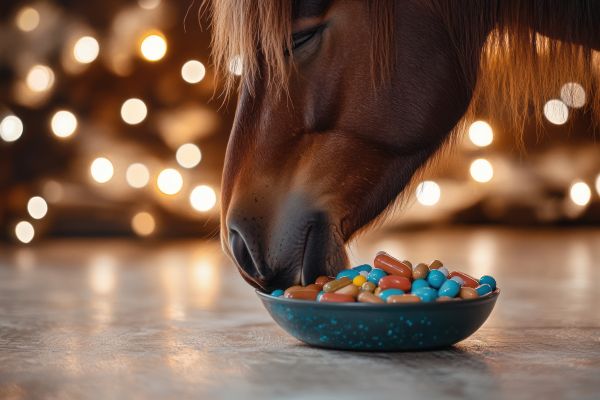
AdobeStock image
By Brian S. Burks, DVM, Diplomate, ABVP, Board-Certified in Equine Practice
So your horse has come up lame, and it is determined that he needs and intra-articular medication which is not currently available in the veterinary market- but it is available as a human drug. The human drug is not used due to price, but instead a compounded formulation is used. Saving money is something everyone wants to do, but what if the medication did not work? How much has been saved? Worse, the horse is no better, or has been harmed in some way, or even met with death.
Compounded medications vary widely in how they are made, and may contain more, less, or none of the desired medication. They may not even be sterile. There are many examples, including compounded omeprazole. Some medications have been responsible for numerous deaths in both humans and animals. Examples include fungus infected steroids put in the central nervous system of people and vitamin formulations incorrectly made, resulting in numerous horse deaths. Others include antibiotics, clenbuterol, toltrazuril (for EPM) and cobalt.
Compounding is the manipulation of a medication to form a specific dose and formulation for a specific animal. There may not be a commercially marketed formulation available. Pioneer and generic medications are formulated from FDA approved bulk drug sources; compounded medications often are not. Banamine is a pioneer drug, while a generic contains the same flunixin meglumine once the pioneer has gone off patent. Both types are approved by the FDA, and there is strict testing to ensure accuracy of the medication in the bottle and how it will affect your horse. Compounded medications are not tested and approved by the FDA. Compounded products are not generic drugs and are not equivalent to generic drugs. Such products must not be presented as equivalent to FDA-approved medication and such practice is considered unethical.
Unless there is no commercially available product, compounded medication must be made from FDA approved product. This would make it more, and not less expensive, as the approved product must be used to formulate a proper dosage or form for your animal. Compounding from bulk drug is illegal because the bulk source has not been tested and approved. Illegal formulations may use drug from China or other unscrupulous sources, and can be contaminated with many different chemicals.
This process of FDA approval is time consuming and expensive, but ensures both safety and efficacy. For instance, GastroGard (omeprazole) is a patented medication used to treat equine gastric ulcers. Compounded omeprazole may never have had the medication to begin, may have broken down in the bottle or tube due to any number of factors, such as pH in the tube, or may not be formulated to get through the gastric acids in a large enough amounts to be effective. I have scoped many horses that have been on compounded omeprazole for gastric ulcers. The gastric ulcers are still present after many months of treatment, and are usually among the worst ulcers seen in the horse’s stomach. After being treated with GastroGard for one month, these ulcers have healed. There is currently no generic for GastroGard.
Increasingly, some compounding pharmacies are offering (1) preparations that are very similar to approved products, (2) a new formulation of an approved ingredient (e.g. an injectable form of omeprazole), and (3) formulations of new products containing active ingredients not approved in the U.S. market.
The AAEP’s Equine Veterinary Compounding Guidelines state that falling below the standard of care occurs “when he/she fails to exercise the level of care, skill, diligence and treatment that is recognized as the standard of acceptable and prevailing veterinary medicine.”
Compounding does have a place, such as the situation where a specific drug is needed, but there is no FDA approved medication available. Compounding pharmacies should follow Good Laboratory and Good Manufacturing Practices, and should be overseen by the Pharmacy Compounding Accrediting Board. Veterinarians can lose their license and may not be covered by malpractice insurance if they use products that are compounded illegally. These types of medications may also result in harm to your horse.
- A valid Veterinarian-Client-Patient relationship (VCPR) must exist.
- The health of the animal must be threatened or suffering, or death may result from failure to treat.
- There must be no FDA-Approved, commercially available animal or human product that can be used to treat the patient.
- The compounded product must be made must be made from an FDA-approved, commercially available animal or human drug.
- The expiration date must be short, limited to the duration of therapy.
- Veterinarians cannot use compounded drugs to save money over an FDA approved available product that may be claimed to be similar.
Research the compounding pharmacy. Ask questions of the pharmacy, including:
- Are they licensed in the state where the product is prescribed?
- Has the pharmacy established a “beyond use date” for the product and do they test each lot?
- Does the pharmacy report adverse events and is there a recall mechanism in place?
- Is the pharmacy accredited by an industry organization that sets minimum quality standards?
- Are they compliant with United States Pharmacopeia (USP) standards for good compounding practices?
- Where do they source the drug used in the product you are prescribing?
- Do they have clinical evidence this product will perform for the prescribed indication in the horse?
- Have they tested the product for purity, potency, stability and sterility (if it is an injectable form)?
- Does the pharmacy carry liability insurance?
FDA-approved medications, when available, should always be used. Compounded products should only be used necessary, and not in place of approved medications for the appropriate indication. It is the best thing for the horse.
Follow Fox Run Equine Center for regular, reliable educational posts by Dr. Burks, just for horse owners:
https://www.facebook.com/FoxRunEquineCenter